Hazardous substances register software for SMEs: inexpensive, audit-proof, ready for use in two working days
The GefStoffV requires a complete list of hazardous substances in accordance with Section 6 Paragraph 12. Lean, testable software is crucial for SMEs. We compare cost structures, mandatory fields and show how the CIVAC workspace covers the requirement in two working days.
According to Section 6 Paragraph 12 of the Hazardous Substances Ordinance (GefStoffV) in the version dated November 15, 2016, last changed on July 27, 2021, employers must keep a list of all hazardous substances that employees have to deal with. For small and medium-sized companies, the obligation is identical to that of corporations, the budget is not. An inexpensive, verifiable hazardous substances register software decides whether the obligation becomes routine or a permanent task.
This article shows which mandatory fields the GefStoffV specifies, which cost structures are common on the market and what SMEs should pay attention to when making their selection. We also classify how the CIVAC compliance platform and Officer-as-a-Service can be set up in two working days, instead of two to six weeks with classic advice. The appointment certificate, signed, filed, verifiable.
Key Takeaways
- Section 6 Paragraph 12 GefStoffV specifies seven mandatory fields: name, classification, quantity range, work area, activity, reference to the safety data sheet and substitute substance testing.
- Market prices for hazardous materials register software for SMEs are between 30 and 250 euros per month, depending on import functions, multilingualism and audit templates.
- A cheap solution is not necessarily the cheapest, but rather the one with the lowest total cost of ownership including maintenance, training and audit trail.
What the GefStoffV requires of SMEs
The obligation to keep a list of hazardous substances results from Section 6 Paragraph 12 GefStoffV. It applies to every employer regardless of the size of the company. The regulation does not provide for an exception for SMEs. Anyone who uses, stores or produces hazardous substances keeps a register.
Mandatory content is the name of the hazardous substance, the classification according to CLP Regulation (EC) 1272/2008, the quantity range per work area, the reference to the safety data sheet according to Annex II REACH and the documentation of the substitute substance test according to § 7 Para. 3 GefStoffV.
In addition, the TRGS 400 requires a Risk assessment per activity, the TRGS 555 operating instructions and the TRGS 510 storage rules. The directory is the database for all these documents.
For SMEs, the obligation is made more difficult in practice by two factors: small teams without dedicated hazardous substances officers and fragmented data sources such as PDF safety data sheets, Excel lists and labels.
Supervision by the federal states, such as the LAGetSi in Berlin or the trade inspectorate Baden-Württemberg, regularly checks whether it is up to date. Outdated directories, missing substitute material checks and gaps in quantity information are the most common complaints.
A suitable software solves these problems via automatic SDB import, versioning and a central audit logbook. The auditor calls, the evidence is ready.
Mandatory fields in the directory: the minimum data
Seven fields are mandatory. The name of the substance or mixture according to the safety data sheet section 1.1 is the basis. It is supplemented by a CAS or EC number to avoid confusion.
The classification follows the CLP regulation. Hazard pictograms (GHS01 to GHS09), hazard warnings (H-phrases) and safety warnings (P-phrases) are required. For mixtures, the classification of the mixture is decisive, not that of the individual components.
The quantity range must be stated for each work area. The TRGS 400 distinguishes between small quantities (less than 1 kg), medium quantities (1 to 100 kg) and large quantities (over 100 kg). For very dangerous substances, such as CMR category 1A or 1B, the granularity must be chosen more finely.
The work area links the substance with the spatial use. This enables risk assessments for each workplace and the creation of operating instructions in accordance with TRGS 555.
The activity describes the specific handling. Mixing, spraying, cleaning and heating lead to different exposure scenarios. The information is the basis of the protective measures according to § 8 to § 10 GefStoffV.
The reference to the safety data sheet with the version date and storage location completes the data set. The substitute substance test according to Section 7 Paragraph 3 GefStoffV must be documented, even if the result is negative.
How much does a cheap solution cost?
The market for hazardous materials inventory software is broad. Pure database solutions without maintenance start at around 30 euros per month, but do not cover any audit trail. Standard solutions with SDB import, label printing and reports are between 80 and 180 euros per month per location.
Group solutions with SAP connection, multilingual client capability and API interfaces are between 400 and 1,500 euros per month. This is rarely proportionate for SMEs.
The cost trap is not in the licence price, but in the setup. An average SME with 150 hazardous substances requires 30 to 50 working hours for the initial recording. At an hourly rate of 75 euros, implementation costs range from 2,250 to 3,750 euros, often multiples of the annual licence.
A cheap solution minimises this effort. Automatic SDB import via drag-and-drop, OCR for printed data sheets and standard templates for operating instructions reduce setup time to 8 to 12 hours.
In addition, there are ongoing maintenance costs. SDBs change on average every three years, new substances are added and old ones are replaced. If you don't have versioning, you lose track. The appointment certificate, signed, filed, verifiable.
The CIVAC platform covers recording, versioning and audit trails in one licence. Licence the workspace for your internal representatives or have our representatives order it.
Selection criteria for SMEs
Twelve criteria help with the selection. First: SDS import. The software should accept safety data sheets in PDF format and extract mandatory fields using text recognition. Manual typing is the most expensive option.
Second: CLP up-to-dateness. The CLP Regulation is constantly being adapted, most recently through the Delegated Regulation (EU) 2023/707 on new hazard classes. The software must automatically make these changes.
Third: Substitute testing. Section 7 Paragraph 3 GefStoffV requires documented testing to determine whether a less dangerous substance can be used. A suitable template with the obligation to provide reasons saves hours.
Fourth: operating instructions. The software should automatically generate operating instructions according to TRGS 555 from the data record, multilingual and with versioning.
Fifth: storage rules. TRGS 510 with its prohibitions on joint storage must be illustrated. An automatic conflict check prevents illegal storage.
Sixth to twelfth: audit logbook, role and rights management, EU data residency, interface for risk assessment, multilingualism for foreign employees, mobile access via tablet and an assigned contact person for escalations. Audit-proof, documented, Section 6-proof.
The CIVAC platform covers these twelve criteria in the 490 ready-to-use audit templates.
The role of the hazardous substances officer
A hazardous materials representative is not mandatory in every company. TRGS 400 recommends naming from a medium level of complexity, for example if there are CMR substances, activities of protection level 3 or 4 according to GefStoffV or storage quantities of more than 200 kg of hazardous substances.
The naming is mandatory via special legislation, such as § 31 ChemG for manufacturers, § 7 Radiation Protection Act for radioactive substances or § 13 BImSchG for Facilities requiring approval. Anyone who works here without a designated representative risks fines according to Section 26 GefStoffV of up to 50,000 euros.
The order is made in writing. An appointment certificate specifies tasks, authorities, reporting line and resources. It is part of the audit file and is presented to the supervisory authority upon request.
In SMEs, the task is often assigned to the occupational safety specialist or the operations manager. This is permissible provided that the professional qualifications are proven and sufficient working hours are available.
If you do not have a suitable internal candidate, you can have the external hazardous substances officer appointed. CIVAC delivers the appointment certificate, the specifications, the reporting line and ongoing support in one package.
The entrepreneur's responsibility remains unaffected according to Section 13 ArbSchG. The representative advises and monitors; the management bears ultimate responsibility. Others run compliance like a filing cabinet. We run it like software.
Implementation in two working days
The classic implementation route takes four to eight weeks. The selection process, contract, training, data migration and pilot phase all add up. This is a bottleneck for SMEs because day-to-day business runs parallel.
The CIVAC route shortens the process to two working days. Day one: Onboarding call, transfer of existing directories as Excel or CSV files, automatic enrichment of the substances with CLP data from the ECHA databases, creation of the location structure.
Day two: Import of the safety data sheets via drag-and-drop, OCR recognition, manual rework of the gaps, generation of operating instructions according to TRGS 555, appointment certificate from the hazardous substances officer and handover of the Reporting line.
The platform is productive from the third day. Employees access the directory via the web browser or the mobile app, new substances are created using the SDB upload form, and the audit trail runs automatically.
The prerequisite for rapid introduction is proper preparatory work. If you have a current Excel list with at least the mandatory fields, you will make faster progress. If you start from scratch, you should also plan an inspection with photo documentation.
Ongoing maintenance is lean. One to two hours per month are enough for updating the SDSs, checking substitute materials and reporting to management. The auditor calls, the evidence is ready.
Interfaces to occupational safety and fire protection
The hazardous substances register is not an island. It provides data for the risk assessment according to § 5 ArbSchG, for the fire protection documentation according to DGUV regulation 1, for the storage concepts according to TRGS 510 and for the environmental protection reports according to BImSchV.
An integrated platform avoids double data storage. Anyone who creates the hazardous substance will see it in the risk assessment of the occupational safety specialist, in the inspection by the fire protection officer and in the facility register of the environmental officer.
The interface to occupational medicine according to ArbMedVV is particularly relevant. Certain substances trigger compulsory precautions, others offer mandatory precautions. Software with the ArbMedVV appendix automatically labels the substances and triggers appointments with the company doctor.
For systems in accordance with the Major Accident Ordinance (12th BImSchV), the directory provides the quantity information for the lower and upper classes. The threshold values are listed in Annex I of the Major Accident Ordinance and must be compared annually.
The interface to the supply chain according to LkSG, as long as the company falls within the scope of application, is covered by the source of the material. CMR substances from third countries trigger increased due diligence requirements.
CIVAC maps these interfaces in a data model. Compliance platform and Officer-as-a-Service in one tool, with EU data residency and ISO/IEC 27001:2022-ISMS.
Common errors and supervisory complaints
The state trade inspectorate regularly publishes reports on complaints. The most common gaps have been constant for years.
First: Outdated safety data sheets. The software must detect versions and mark outdated documents. An SDS older than three years will be noticeable during the test.
Secondly: Missing replacement substance test. Section 7 Paragraph 3 GefStoffV requires documented testing, even if the result is negative. An empty field is a reason for complaint.
Third: Inconsistent quantities. Anyone who has 50 kg in storage but states five kg in the register risks a correction order. The software should synchronize the inventories with goods receipt and consumption.
Fourth: Missing job description. Without activity there is no risk assessment. The software must issue a warning if activities are missing.
Fifth: Gaps in CMR substances. Section 10 GefStoffV requires special measures for substances in categories 1A and 1B, from keeping records to registering exposures to compulsory precautions. The software should mark these substances separately.
Sixth: No version track. During the audit, it must be clear who changed what and when. Audit-proof, documented, § 6-firm.
This is how SMEs switch to CIVAC in two working days
CIVAC is a compliance platform and officer-as-a-service in one. We deliver the hazardous substances register, the 490 audit templates, the appointment certificate for the hazardous substances officer and the reporting line in one package. The introduction takes two working days instead of two to six weeks.
Licence the workspace for your internal representatives or have our representatives order it. The licence model starts at around 95 euros per month for SMEs with up to 250 hazardous substances, the officer-as-a-service model with a fixed monthly flat rate depending on complexity.
Getting started begins with a 30-minute exploratory discussion. We check inventory, locations, number of materials and existing documents. This creates a concrete offer with a fixed price and delivery time.
We then set up the workspace, migrate existing data, import safety data sheets, create operating instructions and hand them over to your representatives or ours.
You retain ultimate responsibility, we deliver the work. The workspace runs on EU servers, is certified according to ISO/IEC 27001:2022 and offers the complete audit logbook for the trade inspectorate.
Turn reading into a mandate. Write to info@civac.de or use the contact form on civac.de. We will respond within two working days with a specific proposal.
FAQ
At what size is hazardous materials register software worthwhile for an SME?
As soon as more than 20 hazardous substances are used at several workplaces, software is worthwhile. From this limit, Excel lists lose the overview of SDB versions, substitute substance tests and audit trails. The investment pays off in the amount of care time saved.
Which mandatory fields does Section 6 Paragraph 12 GefStoffV require in the directory?
Name of the hazardous substance, classification according to CLP, quantity range per work area, work area, activity, reference to the safety data sheet and the documented substitute substance test according to Section 7 Paragraph 3 GefStoffV. Seven fields, all mandatory.
How much does hazardous materials register software for SMEs cost in the first year?
The licence is between 30 and 250 euros per month. The setup costs between 2,000 and 4,000 euros, depending on the number of fabrics. A lean solution for SMEs costs less than 5,000 euros in the first year.
Does an SME have to appoint a hazardous substances officer?
There is no general obligation. The TRGS 400 recommends ordering from medium complexity. It becomes mandatory through special laws such as Section 31 ChemG or Section 13 BImSchG. Upon request, CIVAC will provide an external representative with an appointment certificate.
How does the software update safety data sheets?
Via automatic reminder after three years, upload of new versions by the manufacturer and OCR-based extraction of the mandatory fields. The old version remains audit-proof in the archive, the new version is immediately productive.
How long does it take to implement the CIVAC solution?
Two working days with proper preparatory work. Day one: Onboarding, data migration, location structure. Day two: SDS import, operating instructions, appointment certificate, reporting line. From day three the platform is productive. Classic advice takes two to six weeks.
Sounds like a lot of work?
Officer duties, deadlines, paperwork — that's exactly what we take off your hands. Say hello and we'll show you how.
Turn this into a mandate.
Let us carry the operational weight. External officer, templates and documentation in one workspace. No obligation.
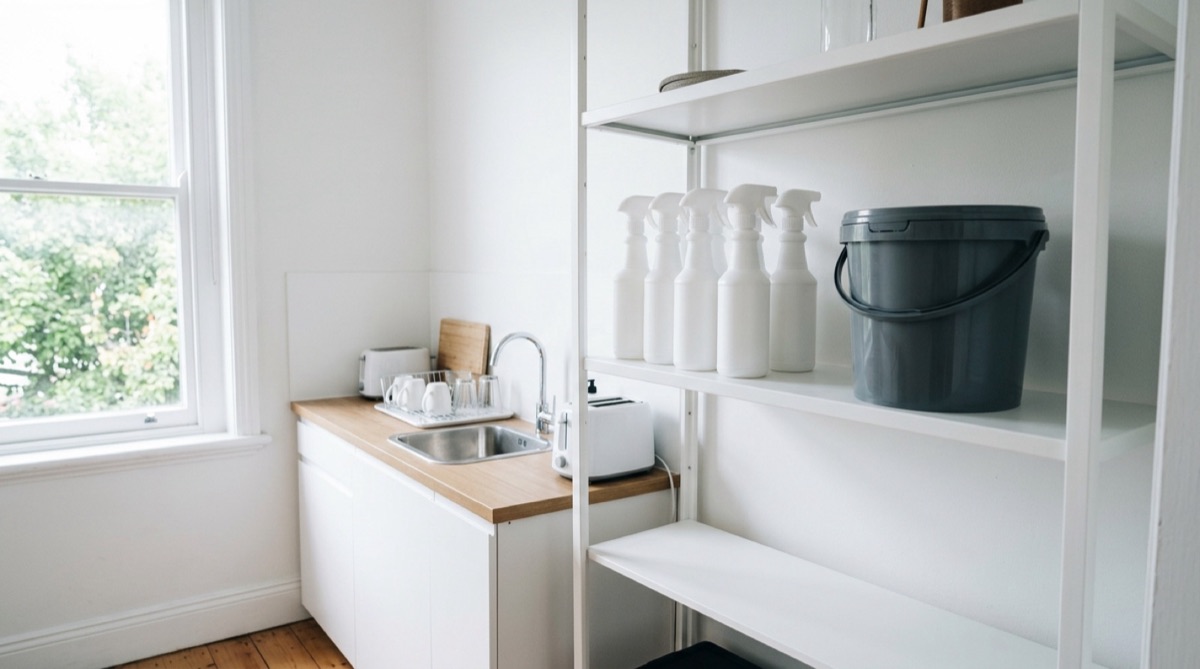
Section 6 Para. 12 Sentence 3 GefStoffV: when an office or a fulfilment warehouse needs no hazardous substances register, and why that answer has to come from the risk assessment